Opposite network patterns of integration-segregation in psychedelic and sedated states of consciousness.
Bottom line: Psychedelics were associated with increased brain integration, while sedation was linked to greater segregation, suggesting a fundamental shift in neural organization between these states of consciousness.
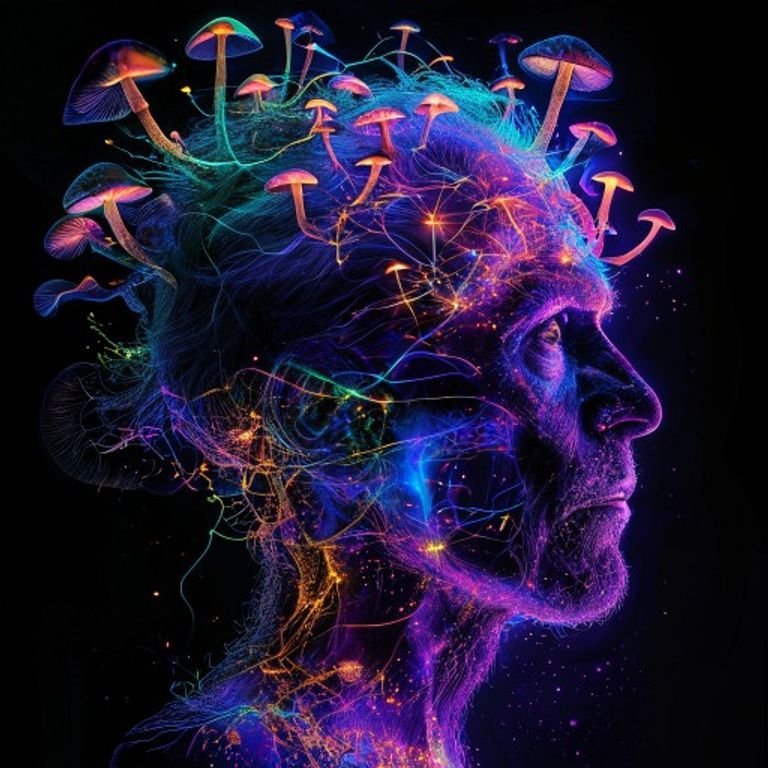
A volunteer lies in a scanner. Their brain is under the influence of a psychedelic. The machine shows activity that looks like a web, some parts dense, others sparse. The researcher watching knows this is not just a different state of mind—it’s a different kind of brain.
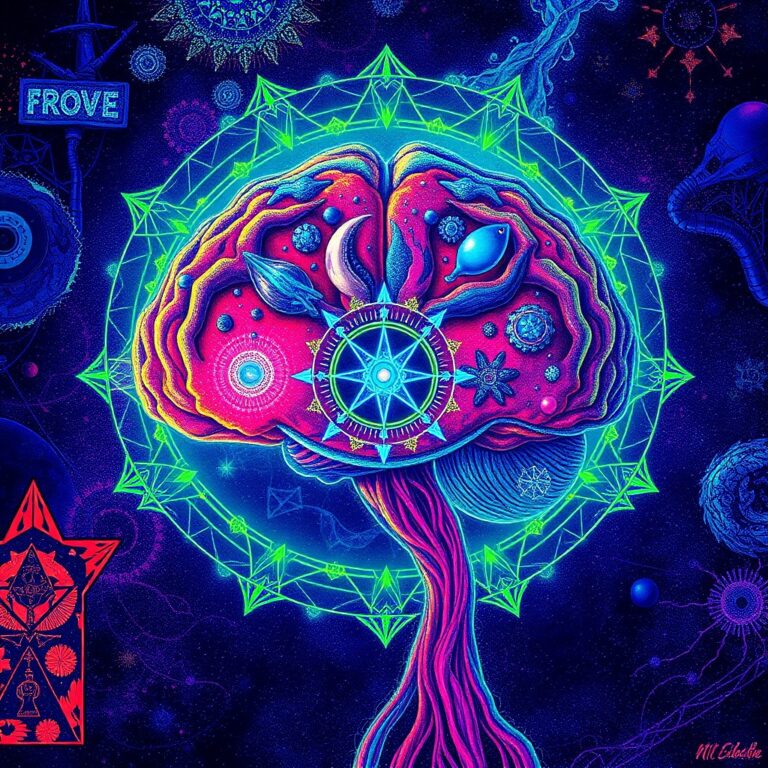
The study in Cell Reports shows something strange: the brain’s integration-segregation patterns flip between psychedelic and sedated states. It’s as if the brain is using two sides of the same coin, one for waking, one for sleeping.

The Brain’s Hidden Mirror
Psychedelics change the brain. But how exactly? For years, scientists have tried to map the neural signatures of altered states—from sleep to meditation to the hallucinations of a psychedelic trip. Now, a study has found a pattern so precise it feels like a secret code.
The researchers looked at functional MRI scans from people under the influence of psychedelics, people sleeping, and people sedated with propofol. What they saw was a clear symmetry. Psychedelics are linked to increased integration. Brain regions communicate more freely, creating a kind of web that spans the whole brain. Sedation, whether from sleep or propofol, is the opposite: integration drops, and segregation rises. Brain regions become more isolated, like islands in an ocean.
This isn’t just a change in activity level. It’s a fundamental shift in how the brain organizes itself. The study found these patterns were consistent across different scales—large networks, small regions. The implications are big. If the brain changes so much between these states, it suggests that consciousness itself may depend on the balance between integration and segregation.
The Science Behind the Mirror
Integration and segregation describe how parts of the brain communicate. Integration is about how connected different regions are, how much they share information. Segregation measures how distinct and isolated these regions are.
Under the influence of a psychedelic, integration increases. Functional connectivity—how brain regions talk to each other—rises dramatically. The researchers used network topology and interaction complexity to measure this. The result is a brain that feels more unified, more connected, more alive in a way that feels both alien and familiar.
In sedated states, the opposite happens. Integration drops, and segregation increases. The brain becomes more compartmentalized. Brain regions operate in isolation. It’s a kind of “neural silence,” where the usual chatter between parts of the brain is muted. The brain feels more passive, more distant.
The study controlled for variables—baseline brain activity, dosages. The mirror-image effect appeared consistently. It suggests this is a fundamental property of how the brain organizes itself in different states of consciousness.
A New Lens on Consciousness
This challenges some long-held views. For years, scientists have debated whether consciousness comes from global brain activity or from specialized regions. The “Global Neuronal Workspace” theory says consciousness emerges from a network that shares information. “Integrated Information Theory” says it comes from the brain’s ability to integrate information.
This study adds a new layer. By showing that psychedelics and sedatives flip the balance between integration and segregation, it suggests that consciousness might not be a fixed state. It might be a dynamic equilibrium.
When the brain is highly integrated, like during a psychedelic experience, it might be more open, more connected, more aware. When it’s segregated, like during sleep or sedation, it might be more passive, more withdrawn, less aware.
Another study in bioRxiv found similar results. It used fMRI to compare psychedelic, sleep, and sedated states. Psychedelics were linked to increased global connectivity and decreased local synchrony. This supports the idea that integration and segregation are key to understanding consciousness.
But what if these patterns are disrupted? Could it be that conditions like depression or schizophrenia involve imbalances in these patterns? Could psychedelics, by temporarily increasing integration, help restore a more balanced state?
Frequently Asked Questions
Q: What does integration-segregation mean in the context of the brain?
A: Integration refers to how well different parts of the brain communicate with each other, while segregation measures how distinct and isolated these regions are. Together, they describe the brain’s ability to balance global and local activity.
Q: How does a psychedelic change the brain’s network patterns?
A: Psychedelics increase large-scale integration, meaning brain regions communicate more freely, creating a more unified, connected state. This is associated with the vivid, often surreal experiences people report.
Q: Why do sedatives like propofol show the opposite pattern?
A: Sedatives reduce integration and increase segregation, leading to a more compartmentalized brain. This creates a state of “neural silence,” where the usual chatter between brain regions is muted.
Q: Could these findings help explain mental health conditions?
A: While the study doesn’t provide direct evidence, it suggests that imbalances in integration-segregation might play a role in conditions like depression or schizophrenia. Further research is needed to explore this link.
Q: What are the implications for future research?
A: The study opens new avenues for understanding consciousness and its neural basis. It also raises questions about how these patterns might be influenced by genetic, environmental, or psychological factors.
Sources
- ¶Opposite network patterns of integration-segregation in psychedelic and sedated states of consciousness
- ¶Opposing Network Patterns of Integration-Segregation in Psychedelic and Sedated States of Consciousness
- ¶Neural Correlates of Psychedelic, Sleep, and Sedated States Support Global Theories of Consciousness
Educational Disclaimer
This article is for informational and educational purposes only. It is not medical advice, mental health advice, diagnosis, treatment guidance, or a recommendation to use any substance, supplement, therapy, or protocol.
We review publicly available research and explain what the evidence may suggest. Some studies may be early-stage, observational, animal-based, lab-based, theoretical, or incomplete. Always consult a qualified professional before making health-related decisions.
If you or someone you know is struggling, you are not alone. In the US, call or text 988 (Suicide & Crisis Lifeline). Elsewhere, contact your local emergency or crisis service.
Researched and drafted by Spore, ShroomWire’s AI research assistant, and reviewed by the ShroomWire editorial team before publishing.