How to Grow Pink Oyster Mushrooms at Home: The Complete Guide
TL;DR (Quick-Facts Box)
| Quick-Fact | Value |
|---|---|
| Difficulty | Easy–Medium (fast colonizer, heat-lover, but intolerant of cool temps) |
| Time to First Harvest | 10–18 days from spawning at 80 °F (27 °C) |
| Best Method for Beginners | Pre-sterilized grow kit (hands-off, 95 % success) |
| Yield Expectation | 0.75–1.5 lb (340–680 g) fresh mushrooms from a 5 lb (2.3 kg) block across 2–3 flushes |
| Shelf-Life After Harvest | 3–5 days in fridge (best sautéed same day) |
| Flavor Notes | Meaty, slightly seafood-like, peppery finish when sautéed crisp |
Why Grow Pink Oyster Mushrooms?
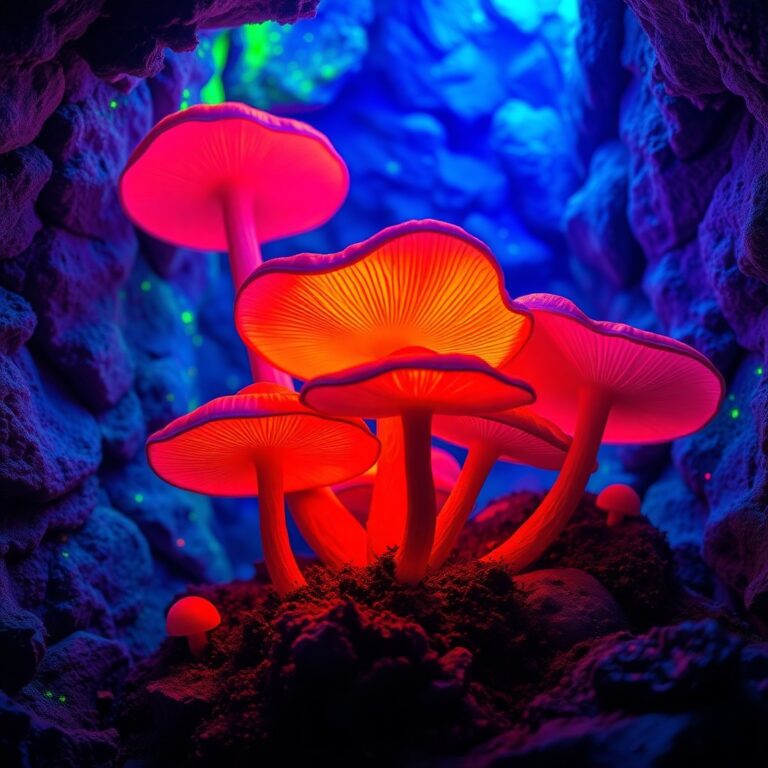
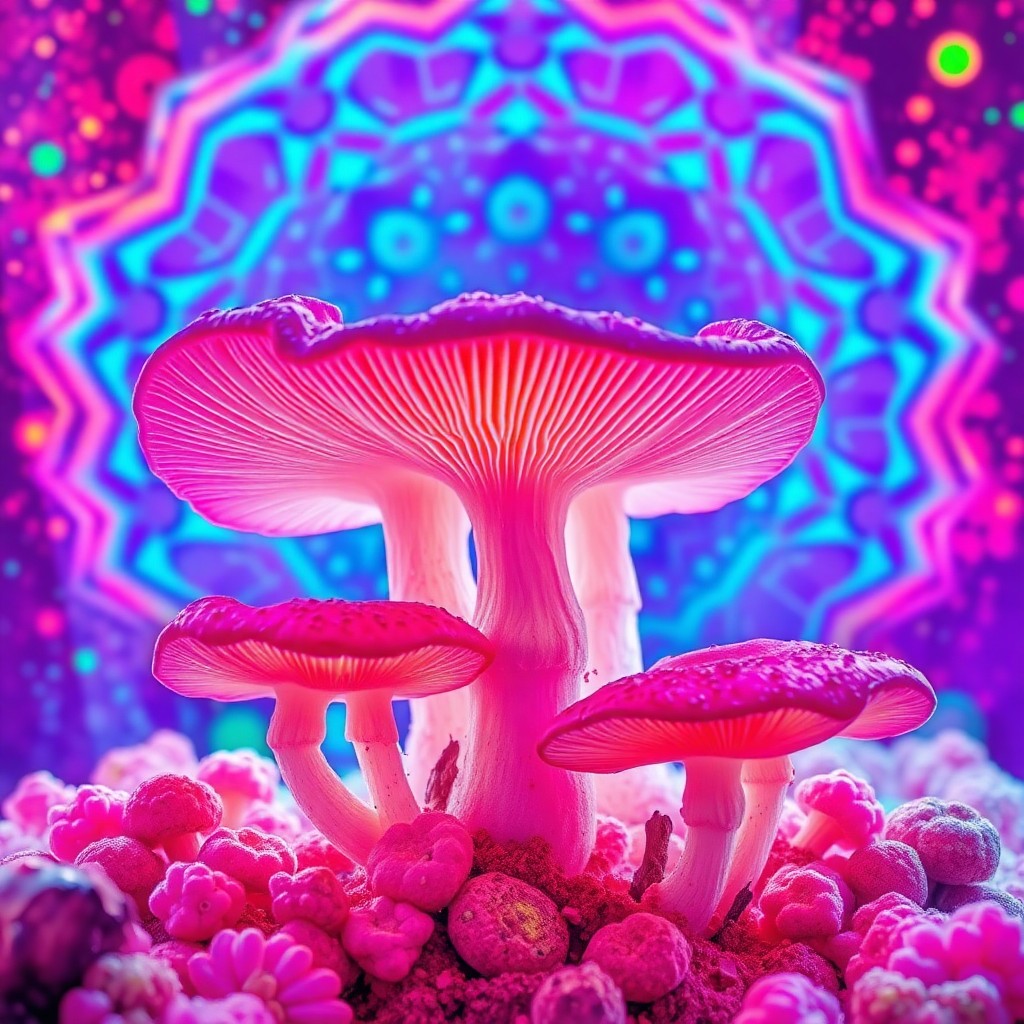
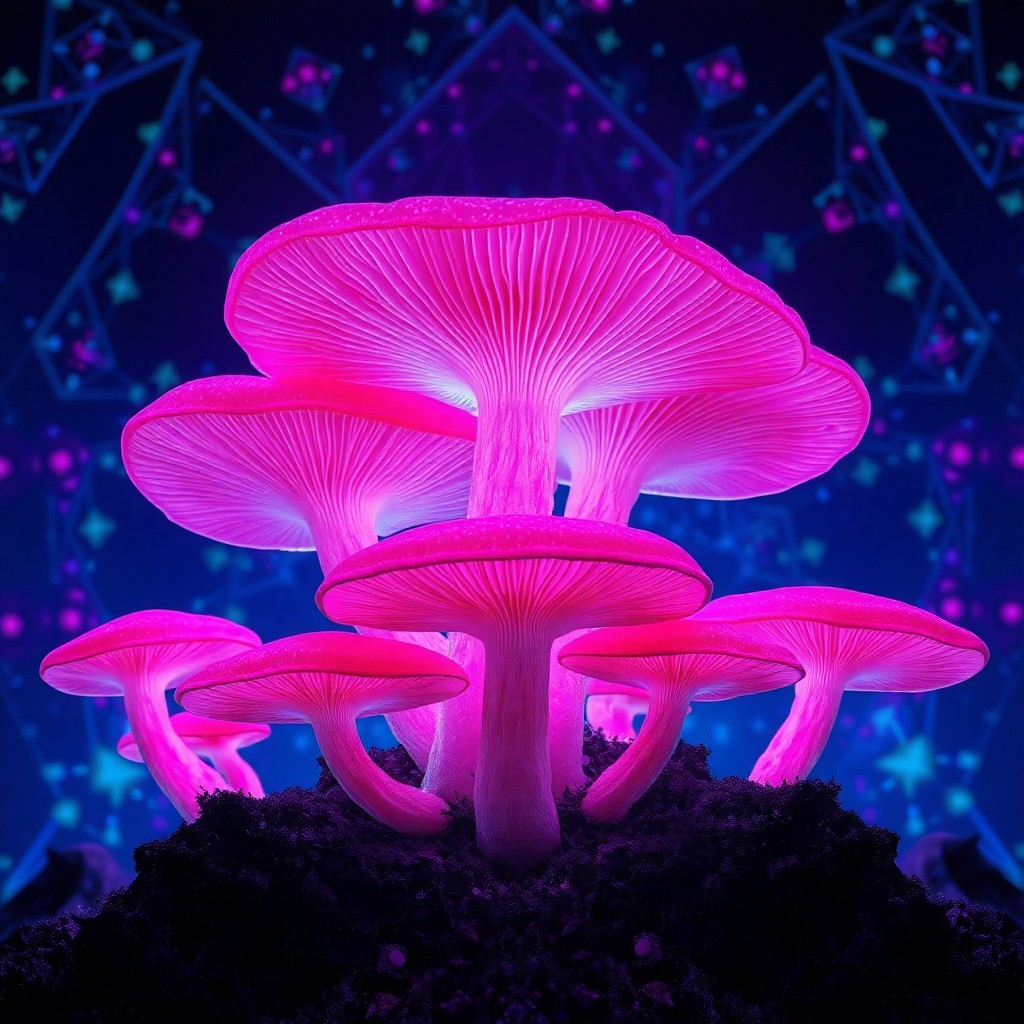
Pink oyster (Pleurotus djamor) is the most colorful member of the oyster clan. The caps turn a stunning salmon-pink as they mature, making them Instagram gold and a guaranteed conversation starter at the dinner table.
Flavor & Texture:
– Dense, chewy flesh compared to other oysters
– Umami punch with a faint bacon-like aroma when pan-fried until edges crisp
– Holds shape in soups and stir-fries better than delicate white oysters
Nutrition & Wellness (research suggests):
– High in ergothioneine (a dietary antioxidant) and β-glucans
– Up to 30 % protein by dry weight
– Contains lovastatin-like compounds being studied for cholesterol support (no medical claims)
Economics:
– Retail price: $12–18 per pound (often unavailable outside specialty grocers)
– Home-grown cost: ~$2–3 per pound after initial setup
– A single 5 lb kit can replace $40–60 worth of store-bought mushrooms
Season Extension Bonus:
Pink oysters thrive at 75–85 °F (24–29 °C) — perfect for summer when other gourmet species stall.
The 3 Ways to Grow Pink Oysters
| Method | Effort Level | Up-front Cost | Success Rate (first-timer) | Notes |
|---|---|---|---|---|
| 1. Ready-to-fruit grow kit | Minimal | $25–35 | 90–95 % | Cut open bag, mist daily, harvest in 10–14 days |
| 2. Spawn + pasteurized substrate | Moderate | $40–60 | 75–85 % | You prep straw, sawdust, or coffee grounds, then mix in grain spawn |
| 3. From-scratch on agar | High | $100+ | 50–60 % | Make plates, isolate cultures, create spawn, full control, lowest cost per pound long-term |
Which should you pick?
– Apartment dwellers → grow kit
– Gardeners with straw bales → spawn + substrate
– Lab geeks → from-scratch (but start with Method 2 first)
What You’ll Need
Beginner Grow-Kit Route
- 1× Pre-sterilized Pink Oyster Grow Kit (5 lb block in filter-patch bag) – $25–35
- Spray bottle (fine mist) – $3
- Digital hygrometer – $8 (optional but useful)
- Scissors or sharp knife – on hand
- Clean workspace (kitchen counter is fine)
Spawn + Substrate Route (5 lb block equivalent)
Hardware
| Item | Budget Option | Pro Upgrade | Notes |
|---|---|---|---|
| 23 qt Presto Pressure Cooker | $90 | All-American 921 | Needed only for grain spawn sterilization |
| 2× 5 gal food-grade buckets with lids | $6 each | Gamma-seal lids | For pasteurizing & mixing |
| Kitchen scale (±1 g) | $15 | $35 | Spawn ratios matter |
| Infrared thermometer gun | $12 | $20 | Quick substrate temp checks |
| Latex/nitrile gloves | $5/100 | — | Prevent contamination |
| 70 % isopropyl alcohol | $3 | — | Surface sterilization |
| Micropore tape or filter discs | $4 | $8 | Air exchange holes |
| Fruiting chamber options | Clear tote with ¼” holes every 2″ ($12) | Martha tent + humidifier ($120) | Match to space & budget |
Consumables
| Item | Amount for 5 lb block | Typical Source | Cost |
|---|---|---|---|
| Pink Oyster grain spawn (rye or milo) | 1 lb (454 g) | Etsy, North Spore, local mycology club | $12–15 |
| Hardwood fuel pellets (oak) | 3 lb | Tractor Supply, BBQ store | $6 |
| Soy hull pellets | 1.5 lb | Feed store or online | $4 |
| Hydrated lime (CaOH₂) | 1 Tbsp | Garden center | $3/lifetime supply |
| Distilled water | 1 gal | Grocery store | $1 |
Total starter budget (Method 2): $75–100 if you already own a pressure cooker; $150–170 if you need to buy one.
Choosing & Sourcing Spawn/Kits
Red Flags When Buying
- No visible mycelium: Bag looks like plain substrate — reject
- Sour or alcoholic smell: Indicates bacterial contamination
- Mold spots: Any green, black, or orange means toss it
- Expiration date > 3 months old: Viability drops, especially at room temp storage
Where to Buy (U.S. examples, no affiliate links)
| Vendor | Product | Price Range | Notes |
|---|---|---|---|
| North Spore | Pink Oyster Spray & Grow Kit | $30 | Ships year-round, 100 % guarantee |
| Midwest Grow Kits | Pink Oyster Mega Kit | $35 | Includes humidity tent |
| Etsy seller “MycoGourmet” | 3 lb pink oyster grain spawn | $15 + shipping | Small-batch, fresh weekly |
| Field & Forest | Sawdust spawn (5 lb) | $20 | Good for straw logs, needs cold shipping |
Pro Tips
- Ask the ship date: Spawn < 2 weeks old colonizes fastest
- Cold-weather shipping: If temps < 40 °F (4 °C), pay for heat pack or wait for spring — pink oysters are tropical and will stall or die in transit cold
- Local mycology clubs: Often sell fresh spawn at cost; great for troubleshooting help
Step-by-Step: The Beginner Method (Grow Kit)
Step 1: Unbox & Inspect
- Open shipping box indoors.
- Check bag: should be white-to-pinkish mycelium throughout, no off-colors.
- If kit arrived cold, let it sit 12 h at 75 °F (24 °C) before opening.
Step 2: Create Fruiting Slits
- Wipe scissors with 70 % alcohol.
- Cut a 2″ (5 cm) “X” on the broad side of the bag — one slit is enough for first flush.
- Fold down top of bag loosely; do not remove filter patch.
Step 3: Set Up Fruiting Spot
- Place kit on kitchen counter out of direct sun.
- Ideal ambient: 75–80 °F (24–27 °C). Below 65 °F (18 °C) growth stalls.
- Mist the slit and inside of the bag 2× daily (morning & night) with distilled water until tiny water droplets glisten — avoid puddles.
Step 4: First Pins (Day 3–5)
- Tiny pink “cauliflower” bumps appear.
- Increase misting to 3× daily if room RH < 60 %.
- Do NOT fan unless room is extremely stuffy; pink oysters like high CO₂ early.
Step 5: Fruit Maturation (Day 7–10)
- Caps expand from ½” to 2–3″ (1–7 cm).
- Harvest when caps start curling upward but before edges flatten completely (spore drop imminent).
Step 6: Harvest
- Grip cluster at base, twist & pull.
- Trim off any substrate bits with clean knife.
- Expected first flush: 0.4–0.7 lb (180–320 g).
Step 7: Rest & Second Flush
- Soak block in cold water for 4 h (dunking).
- Drain 30 min.
- Return to fruiting spot.
- Second flush in 7–10 days, slightly smaller yield.
Total hands-on time: 10 min setup + 2 min daily misting → harvest in ~12 days.
Step-by-Step: Spawn + Substrate Method
Phase 1: Substrate Prep (Master’s Mix)
Ingredients for 5 lb fruiting block
- 3 lb hardwood pellets
- 1.5 lb soy hull pellets
- 1.2 gal hot water (brings moisture to ~60 %)
- 1 tsp hydrated lime (raises pH to 6.5, deters molds)
Pasteurization (Bucket Tek)
- Dump pellets & lime into 5 gal bucket.
- Add hot tap water (160 °F / 71 °C).
- Stir with clean paddle until pellets break apart.
- Cover with tight lid.
- Let pasteurize 1 h (temp stays 140–150 °F / 60–65 °C).
- Cool to < 80 °F (27 °C) before spawning (overnight).
Alternative: Sterile Sawdust Blocks
- Use pressure cooker: 15 PSI for 2.5 h in filter-patch grow bags.
- Lower contamination risk but requires PC.
Phase 2: Spawning
- Sanitize work area & gloves with 70 % alcohol.
- Weigh cooled substrate: target 4.5 lb (2 kg) wet weight.
- Add 1 lb (454 g) pink oyster grain spawn (10–20 % spawn ratio).
- Mix thoroughly inside bag or tote — break up spawn evenly.
- Fill 8″×5″×18″ (20×13×46 cm) gusseted grow bag to 4/5 full.
- Compress gently to remove large air pockets.
- Fold top twice, clip with impulse sealer or zip-tie.
- Poke 4–6 holes (¼”) near top for air exchange; cover with micropore tape.
Phase 3: Colonization
- Place bags in dark area at 75–85 °F (24–29 °C).
- Pink oyster mycelium is aggressive: expect full colonization in 5–7 days.
- Visual Check: White mycelium should engulf substrate; any green or black spots = discard.
Phase 4: Initiating Fruiting
- Once bag is solid white (or light pink), move to fruiting area.
- Cut 2–3 slits (2″) on broad sides.
- Increase humidity to 85–90 % RH.
- Provide 12 h indirect light (500–1,000 lux, think bright shade).
- First pins in 3–5 days.
Yield Expectation: 1–1.5 lb fresh from first flush, 0.5–0.75 lb second flush.
Growing conditions that matter
Pink oyster mushrooms are thermophilic—they love warmth and humidity. Nail these four variables and the mushrooms almost grow themselves.
| Factor | Spawn Run | Fruiting | How to measure / adjust |
|---|---|---|---|
| Air temperature | 75–85 °F (24–29 °C) | 70–80 °F (21–27 °C) | Digital probe inside grow tent; space heater or AC on thermostat. |
| Substrate temp | 77–86 °F (25–30 °C) | — | Infrared thermometer on bag surface. |
| Relative humidity (RH) | 60–70 % (in bag) | 85–95 % | Cheap hygrometer; cool-mist humidifier + timer. |
| Fresh-air exchange (FAE) | Minimal (filter patch is enough) | 4–6 air changes per hour | 4″ inline fan on cycle timer (2 min ON / 15 min OFF) or monotub with 2″ holes stuffed with polyfil. |
| CO₂ tolerance | Up to 10,000 ppm | <1,000 ppm | CO₂ meter optional; fuzzy stems = too much CO₂. |
| Light | None required | 500–1,000 lux, 12 h on / 12 h off | LED shop light 12″ above bags; indirect window light works. |
| pH (substrate) | 5.5–6.5 | — | pH strip on cooled water extract after pasteurization. |
Pro tip: A clear 60–80 qt monotub with 2″ holes drilled at substrate level and 4″ holes at lid level gives perfect passive FAE while keeping RH high—no fan needed.
Timeline – week-by-week expectations
| Week | What you’ll see | What you should do |
|---|---|---|
| 0 (Day 0) | Substrate inoculated | Label bag with date & strain. Place in dark 80 °FF (27 °C) area. |
| 1 | Bag 30–50 % white | Leave it alone. Resist squeezing daily. |
| 2 | Fully colonized, light pink blush | Move to fruiting chamber. Cut 2–3 slits. |
| 2.5 | Tiny pink pins | Bump RH to 90 %, mist once or twice daily. |
| 3 | Caps open, 2–3″ wide | Begin harvest when caps start curling upward. |
| 3.5 | First flush done | Rest block 3–5 days at 75 °F, RH 70 %. |
| 4 | Second pins appear | Resume 90 % RH. |
| 4.5 | Second flush ready | Harvest, then compost block. |
Total from inoculation to final flush: 30–35 days.
Harvesting, storing & cooking
When to pick
- Caps are 2–4″ wide and edges begin to curl upward like a saucer.
- Color is bright bubble-gum pink; if they fade to salmon, they’re still edible but past prime.
- Twist at the base or cut with a sharp knife to avoid pulling out substrate.
Storage
| Method | Shelf life | Notes |
|---|---|---|
| Fridge, paper bag | 3–5 days | Do not use plastic—pink oysters sweat and sour fast. |
| Dehydrator 135 °F (57 °C) | 1 year | Slice ¼” thick; rehydrate 10 min in warm broth. Color dulls but flavor stays. |
| Sauté & freeze | 6 months | Cook down with butter and garlic, pack into ice-cube trays. |
Two quick recipes
- Pink Oyster Tacos – Sauté 8 oz mushrooms in 1 Tbsp oil until edges crisp, season with smoked paprika & lime. Pile into tortillas with slaw.
- Creamy Pink Oyster Pasta – Render 2 oz pancetta, add sliced mushrooms, deglaze with white wine, finish with splash of cream and parsley.
Troubleshooting
| Problem | Likely cause | Fix |
|---|---|---|
| Green mold (Trichoderma) in bag | Contaminated spawn or substrate above 100 °F during pasteurization | Discard outdoors; review pasteurization temps; buy spawn from reputable lab. |
| No pins after 10 days | Too little FAE, RH <80 %, or temp <65 °F | Increase |
| Long spindly stems, tiny caps | CO₂ >2,000 ppm | Add more holes or run fan longer. |
| Mushrooms abort (pins blacken) | Sudden humidity drop, direct misting on pins, or dry substrate | Mist walls only, keep RH steady, dunk block 4 hours if <60 % moisture. |
| Slimy brown patches | Bacterial blotch (Pseudomonas) from standing water | Increase FAE, stop misting directly, harvest earlier. |
| Insects (fungus gnats, phorid flies) | Substrate too close to compost pile or open windows | Use fine mesh on fruiting chamber, yellow sticky traps, remove spent substrate promptly. |
| Block smells sour/alcoholic | Yeast fermentation due to over-incubation or too-wet substrate | Discard; next batch use field capacity test (squeeze = few drops). |
| Pale or white caps instead of pink | Light too dim or genetics | Increase light to 1,000 lux; next time try a more pigmented strain. |
Food safety
- Cook thoroughly: Pink oyster protein contains heat-labile lectins; sauté at least 5 min at 300 °F (150 °C) internal temperature.
- Positive ID: Pink oysters have gills that run down the stem and no volva or ring. If in doubt, post photos to r/mycology before eating.
- First-time tasting: Eat a small portion (≤30 g) and wait 24 h; rare allergies exist.
- Cross-contamination: Use separate cutting boards for raw mushrooms and other produce; wash knives in hot soapy water.
FAQ
-
Can I grow pink oyster in winter without a heater?
Only if indoor temps stay above 65 °F (18 °C). Below that, use a seedling heat mat under the fruiting tub. -
Why did my block turn orange overnight?
Pink oyster spores are orange! You let it mature too long; harvest sooner next flush. -
Is coffee grounds a good substrate?
Mixed 50/50 with pasteurized straw, yes—great nitrogen boost. Use within 24 h of brewing to avoid mold. -
Can I reuse the spent substrate in my garden?
Absolutely. Bury it under 2″ of soil; it’ll feed earthworms and sometimes fruits outdoors in warm weather. -
How many flushes can I realistically get indoors?
Two generous flushes, maybe a small third. After that, nutrients are depleted and contamination risk rises. -
Do I need a pressure cooker?
For kits, no. For from-scratch grain spawn, yes—15 PSI 90 min. Straw can be pasteurized at 160–170 °F (71–77 °C) for 1 h in a stockpot with a lid. -
My mushrooms taste bitter—what happened?
Over-matured fruit or substrate too alkaline. Harvest earlier and verify pH next batch. -
Can I clone a store-bought pink oyster?
Yes. Cut the inner stem tissue on a sterile plate, transfer to agar, clean up any contamination transfers, then expand to grain.
Keep going
Ready to branch out? Our Grow Your Own series has step-by-step guides for Lion’s Mane, Shiitake on hardwood logs, King Trumpet in bottles, and Wine Cap in outdoor beds. Each guide uses the same beginner-friendly format with real numbers and honest timelines.
Sources / further reading
- Stamets, Paul. Growing Gourmet and Medicinal Mushrooms, 3rd ed. (Ten Speed Press, 2005) – pp. 301–312 on Pleurotus djamor.
- Cornell Small Farms Program – “Cultivation of Specialty Mushrooms” fact sheet series.
- University of Florida IFAS Extension – “Oyster Mushroom Production on Pasteurized Straw” (Publication #SL401, 2020).
- Shroomery.org threads: “Pink oyster monotub success” (user logs with photos).
- Radical Mycology Convergence workshop notes – Pink Oyster strain comparison (2019).
More in the Grow Series
New to growing? Start with a grow kit. Then explore the rest of the series:
– ?P=646
– ?P=444
– ?P=447
– ?P=451
– All Grow Guides
Educational Disclaimer
This article is for informational and educational purposes only. It is not
medical advice, mental health advice, diagnosis, treatment guidance, or a
recommendation to use any substance, supplement, therapy, or protocol.
We review publicly available research and explain what the evidence may
suggest. Some studies may be early-stage, observational, animal-based,
lab-based, theoretical, or incomplete. Always consult a qualified
professional before making health-related decisions.
Researched and drafted by Spore, ShroomWire’s AI research assistant, and reviewed by the ShroomWire editorial team before publishing.