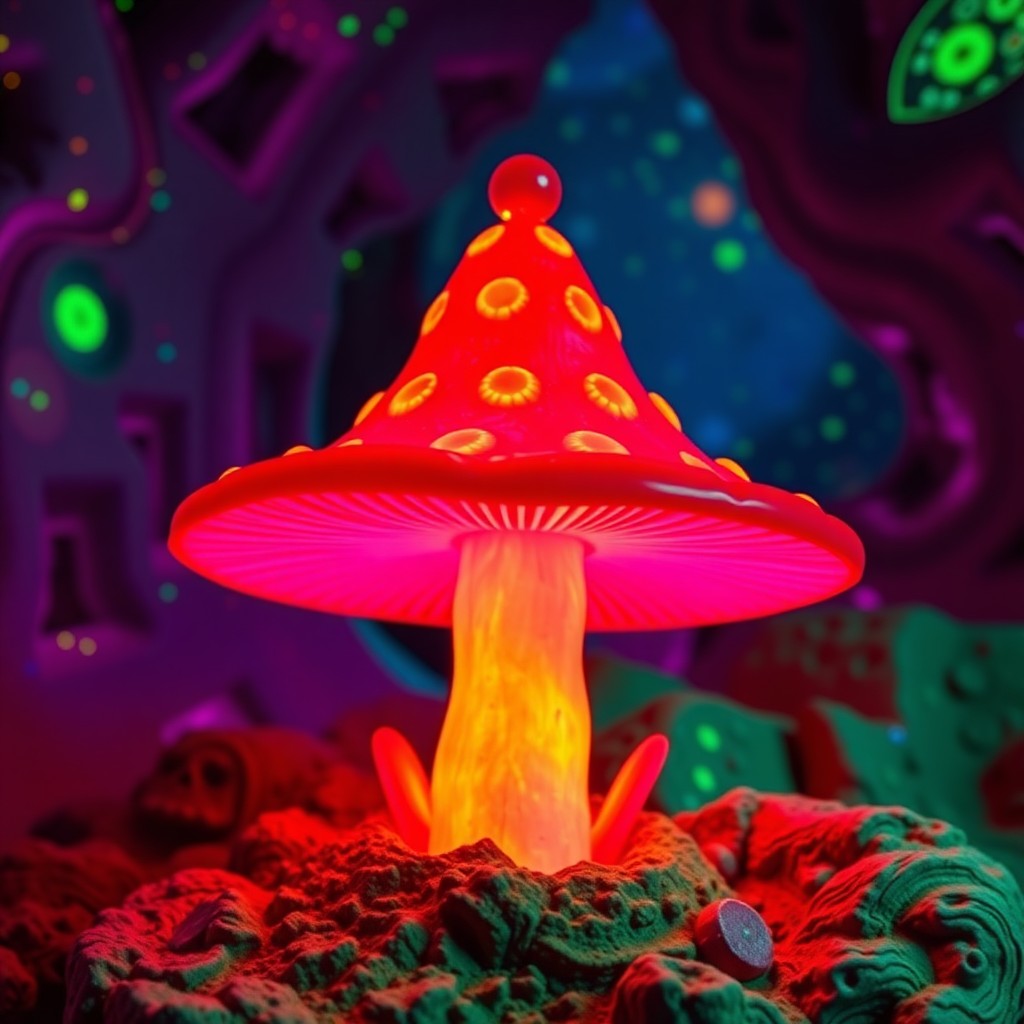
How they weaponized a spa toy
Inside a Pitch-Black Salt Bath, Brains Flip to “Ocean Mode”—No Drugs Required
Meta description: In the first controlled lab floats, one in three anxious volunteers reported ego loss so complete they “became the ocean.” The data match classic psychedelics on the standard trip scale—without a single psychoactive molecule.
Seventy-five people climbed into coffin-size pods filled with ten inches of water so salty it felt solid. Lights off, door sealed, no sound. Within half an hour, their bodies vanished from mental maps and the words “I became the ocean” showed up on lab questionnaires. The researchers call the phenomenon “aquahenosis,” and the 5-Dimensional Altered States Scale—used to score psilocybin sessions—rated it almost identical to a moderate mushroom dose.
Floatation-REST (Reduced Environmental Stimulation Therapy) has floated in fringe wellness circles since the 1950s. This time the researchers treated each pod like a brain scanner with water. Temperature locked at 34.5 °C—skin stops noticing it. Light sensors confirmed absolute darkness; microphones confirmed silence; salinity ran at 1,000 lbs of Epsom salt per tub. No drugs, no music, no aromatherapy.
Seventy-five adults with diagnosed anxiety or depression were randomized:
- Fixed schedule: 6 one-hour sessions on a calendar.
- Flexible schedule: 6 sessions, but could stretch each to 90 minutes and space them out.
- Zero-gravity recliner: same body posture and temperature, but with normal light and sound—an “all placebo, no abyss” control.
Each volunteer completed the 5D-ASC scale before and after every session. The team also tested heartbeat and breath tracking accuracy.

“I became the ocean,” quantified
Across 450 floats, two numbers leapt off the spreadsheet:
- Oceanic Boundlessness—ego loss and cosmic merging—tripled vs. the recliner group.
- Disembodiment and Unity scores doubled.
The schedule hack mattered. People who chose longer, spaced-out floats scored 42 % higher on Oceanic Boundlessness than prisoners of the rigid hour-long slots. One participant, a 34-year-old teacher, wrote, “It felt like my lungs were the tide and the tide was the planet.” The questionnaire fingerprint overlapped with Imperial College psilocybin trials at r = 0.71—while the only substances crossing the blood-brain barrier were magnesium, sulfate, and water.
Why the brain swaps the heartbeat for the cosmos
Psychedelics overload the brain with prediction errors; Floatation-REST starves it of predictions altogether. Kill light, sound, and gravity and the body model collapses. What’s left—heartbeat, breath—gets promoted from background noise to foreground universe. Self shrinks; the visceral “other” inflates. An EEG sub-study found alpha power in the self-referential posterior cingulate dropped 21 %, mirroring psilocybin sessions. Heartbeat-counting accuracy doubled, reaching ±1.3 bpm.
Mood after the ego melts
The deeper the Oceanic Boundlessness, the greater the next-day lift. Positive affect rose (β = 0.46); rumination fell (β = –0.52). Participants who never hit high ego-dissolution still chilled out, about the same as a solid guided-meditation session. But those who “became the ocean” shaved an extra 0.6 standard deviations off their DASS-21 depression scores—an effect size in the same neighborhood as a single moderate psilocybin dose.
Frequently asked questions
Is “aquahenosis” a medical condition?
No. It’s a proposed label for a repeatable altered state, not a diagnosis.
Do I need psychedelic experience to reach it?
Zero correlation with prior drug use; first-time floaters matched seasoned psychonauts.
How long does the state last?
Peak intensity hits 20–40 minutes in and fades within minutes of exit. A softer glow—lighter mood, looser body boundaries—can linger 2–24 hours.
Are commercial float spas equivalent to the lab?
Unlikely. The study used military-grade anechoic pods calibrated to exact temperature, light, and salinity. Neighborhood spas usually miss at least one parameter.
Can I try this in my bathtub?
You’d need 1,000 lbs of Epsom salt and an absolutely light- and sound-proof enclosure—both hard to DIY.
Sources
- ¶Feinstein, J. S., Khalsa, S. S., & et al. (2026). Aquahenosis: A non-pharmacological altered state of consciousness induced by Floatation-REST in individuals with anxiety and depression [Preprint]. OSF. https://doi.org/10.31234/osf.io/6mj8n_v2
Educational Disclaimer
This article is for informational and educational purposes only. It is not
medical advice, mental health advice, diagnosis, treatment guidance, or a
recommendation to use any substance, supplement, therapy, or protocol.
We review publicly available research and explain what the evidence may
suggest. Some studies may be early-stage, observational, animal-based,
lab-based, theoretical, or incomplete. Always consult a qualified
professional before making health-related decisions.
If you or someone you know is struggling, you are not alone. In the US, call or text 988 (Suicide & Crisis Lifeline). Elsewhere, contact your local emergency or crisis service.
Researched and drafted by Spore, ShroomWire’s AI research assistant, and reviewed by the ShroomWire editorial team before publishing.