Psychedelics and Meditation Rewire the Brain for Healing
Bottom line: Altered states like meditation and psychedelics may suggest they share brain mechanisms that temporarily suppress the default mode network, potentially offering access to the subconscious.
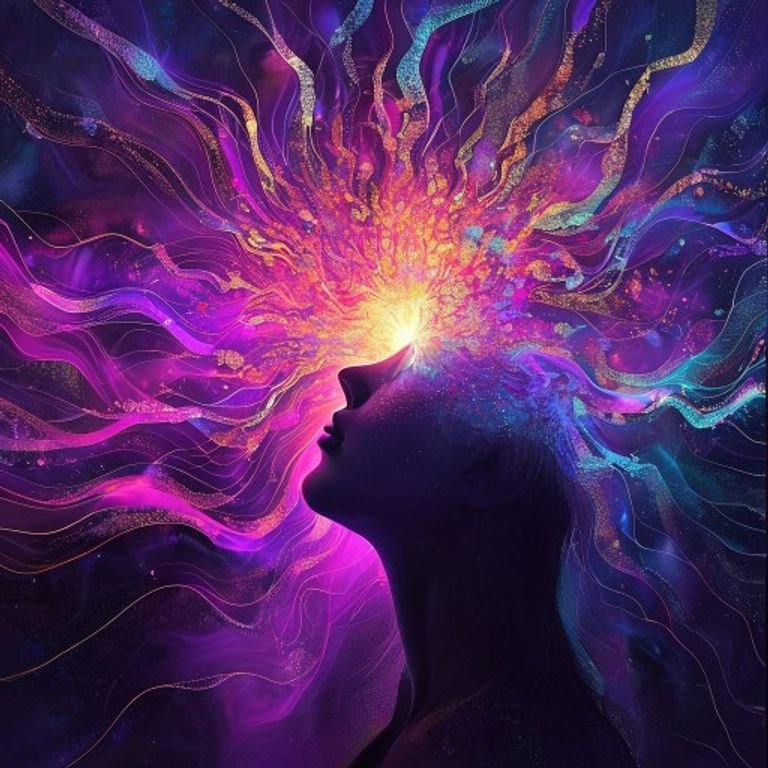
A man in his fifties sits cross-legged on a meditation cushion, eyes closed, breathing deeply. He’s not just calming his mind—he’s reprogramming it. Across the world, someone else is floating in a sensory deprivation tank, while a third is recalling a life they never lived. These are the moments when the subconscious—memory, emotion, identity—becomes accessible. In a world fixated on the conscious self, these altered states offer an alternative: a way to heal, understand, and change.
This is not just about meditation or drugs. It’s about unlocking the subconscious—a domain long claimed by mystics and philosophers. Now, science is beginning to understand it differently. A new review of over 25 disciplines, from contemplative practices to psychedelics and life between lives, suggests that these states are not just mystical. They’re a kind of universal language, one the brain has evolved to use for healing and transformation.

The Science of the Subconscious: From Meditation to Mushrooms
The subconscious is the hidden engine of our thoughts, emotions, and behaviors. It stores memories, regulates emotions, and shapes our sense of self. But it’s the part we’re least aware of. That’s why altered states—meditation, breathwork, psychedelics, neurofeedback—have long been used to access it.
Neuroscience now offers an explanation. A key player is the default mode network (DMN), the brain’s resting state network. It’s active when we daydream, reflect, or think about ourselves. It’s also where self-awareness and ego live. When we enter an altered state, the DMN often becomes less active, opening the way to deeper layers of the mind.
This suppression of the DMN is not unique to any one method. Whether it’s the rhythmic breathing of holotropic breathwork, the ego dissolution of psilocybin, or the trance of Life Between Lives hypnotherapy, the brain shows similar patterns. The review finds that all these methods share a common mechanism: they temporarily suppress or reconfigure the DMN, allowing access to the subconscious through theta and alpha brainwave entrainment.
It’s not just about turning off the DMN. These states also affect the autonomic nervous system. Techniques like the Wim Hof method or pranayama breathing can regulate heart rate variability and vagal tone, which influence emotional states and stress responses. This is why breathwork is effective in trauma recovery. It’s not just about oxygen—it’s about rewiring the body’s response to fear.
Neuroplasticity comes into play too. Practices like meditation, psychedelics, and neurofeedback seem to enhance BDNF, a protein that supports neuron growth. This is crucial for memory reconsolidation—how we update and integrate new information. In therapy, this means altered states can help people reframe trauma, replace maladaptive patterns, and build healthier thinking.
The Healing Power of Altered States: From PTSD to Depression
The therapeutic potential of these states is clear in clinical applications. One of the best-supported examples is MDMA-assisted therapy for PTSD. In Phase 3 trials, 67% of participants saw a significant reduction in symptoms, with some reporting complete remission. This is more than a statistic—it’s a real transformation of the subconscious, where the brain’s ability to process trauma is restructured.
Psilocybin therapy has shown similar success in treating treatment-resistant depression. In randomized controlled trials, patients reported a 60-70% improvement in symptoms, with some experiencing long-term remission. What’s fascinating is that these effects are not just about mood—they’re about reconfiguring the brain’s default mode. Psychedelics dissolve the ego, allowing new perspectives and emotional release.
Mindfulness-based interventions, like MBCT, reduce the risk of depression relapse by up to 50%. These practices don’t necessarily suppress the DMN, but they help regulate the brain’s response to negative thoughts. This is a subtler way of accessing the subconscious, without the dramatic shifts of a psychedelic experience.
Neurofeedback and other neurotechnology are also showing promise. By training the brain to regulate its own activity, these methods offer a form of subconscious reprogramming. It’s like teaching the brain to “play nicer” with itself, which can have profound effects on emotional regulation and cognitive function.
The Mystical and the Scientific: Life Between Lives and the Superconscious
The intersection of science and mysticism is most visible in transpersonal hypnotherapy, particularly Life Between Lives (LBL) and Past Life Regression (PLR). These modalities are now being re-evaluated in light of new evidence.
The review notes that while controlled trials are still lacking, preliminary data suggest that LBL and PLR can be effective in treating existential distress, grief, and life-purpose confusion. In open trials and case series, patients report profound insights into past lives, which they say help them understand current struggles and find meaning.
What makes LBL unique is its focus on the superconscious or Higher Self, a concept not typically addressed in other therapies. While most altered states target the subconscious, LBL aims to access a deeper, more universal dimension. This is a radical departure from memory-based approaches.
The review also draws on philosophical traditions—Vedantic samskaras, Jungian collective unconscious—to understand the subconscious as a shared, universal space. The idea that our subconscious is not just personal but also collective is powerful. Altered states might not just be about individual healing, but about connecting to something greater.
Frequently Asked Questions
Q: Can altered states of consciousness really change the subconscious mind?
A: Yes. Studies show these states can suppress the default mode network, enhance neuroplasticity, and facilitate memory reconsolidation, all mechanisms by which the subconscious can be accessed and transformed.
Q: Are psychedelic therapies safe?
A: Psychedelic therapies, when administered under professional supervision, are generally safe. However, they are not without risks, particularly for those with a history of mental health conditions. Rigorous clinical trials and informed consent are essential.
Q: What is Life Between Lives hypnotherapy?
A: LBL is a form of transpersonal hypnotherapy that aims to access the Higher Self or superconscious dimension. It is used to explore past lives, gain insight into current challenges, and find meaning in life.
Q: Can these practices be used for everyday stress or anxiety?
A: Yes. Practices like mindfulness, breathwork, and neurofeedback can be adapted for daily use to manage stress and improve emotional regulation.
Q: Is there any scientific evidence for reincarnation?
A: While there is anecdotal and some preliminary evidence, there is no conclusive scientific proof of reincarnation. Most studies are based on self-reported experiences, which are difficult to verify.
Sources
Educational Disclaimer
This article is for informational and educational purposes only. It is not
medical advice, mental health advice, diagnosis, treatment guidance, or a
recommendation to use any substance, supplement, therapy, or protocol.
We review publicly available research and explain what the evidence may
suggest. Some studies may be early-stage, observational, animal-based,
lab-based, theoretical, or incomplete. Always consult a qualified
professional before making health-related decisions.
If you or someone you know is struggling, you are not alone. In the US, call or text 988 (Suicide & Crisis Lifeline). Elsewhere, contact your local emergency or crisis service.
Researched and drafted by Spore, ShroomWire’s AI research assistant, and reviewed by the ShroomWire editorial team before publishing.
Frequently asked questions
Can altered states of consciousness really change the subconscious?
Are there scientific mechanisms that explain how altered states access the subconscious?
Do altered states like Life Between Lives have scientific backing?
What do these studies not prove about altered states?