Psilocybin and Meditation Reveal Subconscious Mind’s Hidden Layer
Bottom line: Psilocybin and meditation may suggest access to a shared hidden layer of the subconscious mind, where various altered states of consciousness appear to influence brain function similarly.
What if the key to understanding the subconscious isn’t one method, but a convergence of many? This review explores how meditation, psychedelics, breathwork, and more all tap into the same hidden layer of the mind—offering profound insights into healing, transformation, and the nature of consciousness itself.
The Hidden World of the Subconscious: A Universal Human Capacity
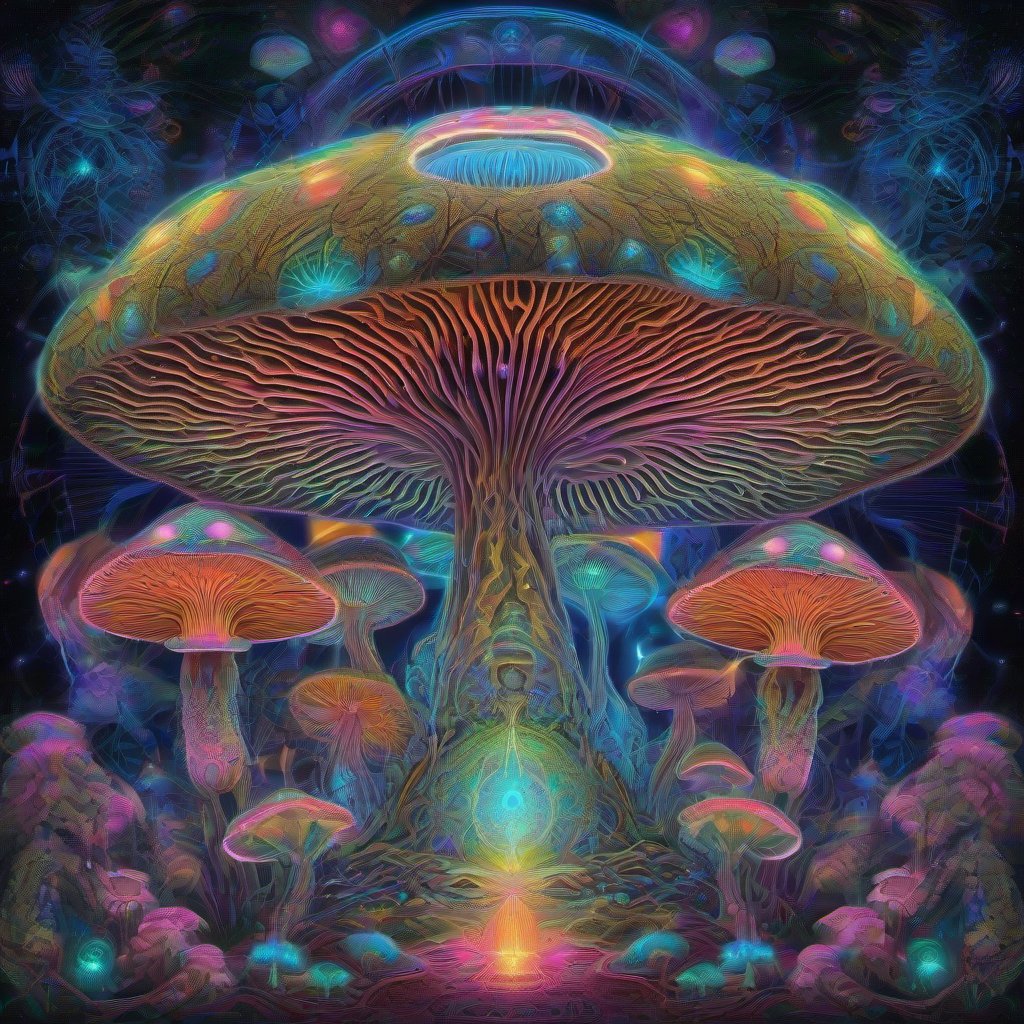
The subconscious mind shapes our lives, steering thoughts, emotions, and behavior without us ever noticing. It holds our deepest fears, desires, and memories, often in forms we can’t fully grasp. Yet the idea of accessing and changing this hidden world is not new. Humans have long used rituals, meditations, and drugs to reach it, believing it holds the keys to healing and transformation.
What makes this pursuit interesting is that it connects the known with the unknown. The subconscious is the part of the mind we don’t see, yet it is where our most profound experiences come from. Altered states of consciousness—whether from meditation, breathwork, psychedelics, or neurotechnology—may not be random changes in the brain. They are structured methods of reaching the subconscious. These states are not limited to any one culture or discipline. They are universal, suggesting a deep, shared human ability to change.
The review brings together evidence from over 25 disciplines, grouped into five main categories: meditative and contemplative practices like yoga and mindfulness, somatic techniques such as breathwork and trauma release, plant-based and psychedelic approaches like ayahuasca and psilocybin, ritual and cultural practices like shamanic drumming and lucid dreaming, and neurotechnological methods such as neurofeedback and virtual reality therapy.
What’s interesting is that these diverse practices, though different in method, share a common goal: to reach and change the subconscious mind.
They also show similar effects on the brain. The review points to several common mechanisms, including the suppression or change in the default mode network (DMN), the regulation of the autonomic nervous system through vagal tone and heart rate variability, and the enhancement of neuroplasticity via brain-derived neurotrophic factor (BDNF). These suggest that all these practices may be tapping into similar neural pathways, allowing access to the subconscious.
The Science of Altered States: From Neurobiology to Clinical Application
At the heart of many altered states is the suppression or change in the default mode network (DMN), a brain system involved in self-referential thought, memory, and introspection. When the DMN is active, we’re in a state of self-awareness, thinking about ourselves and our environment. But when it’s suppressed—whether through meditation, psychedelics, or neurofeedback—it allows for a shift in consciousness, opening the door to the subconscious. This suppression often comes with changes in brainwave activity, with theta and alpha waves becoming more prominent. These waves are linked to deep relaxation, creativity, and access to non-ordinary states of consciousness.
Another common mechanism is the regulation of the autonomic nervous system (ANS), especially through vagal tone and heart rate variability. The ANS controls involuntary functions like heart rate and digestion. In many altered states, the ANS is calmed or modulated, leading to a sense of calm, focus, and heightened awareness. For example, breathwork techniques like pranayama and the Wim Hof method are designed to regulate the ANS, often resulting in deep relaxation and mental clarity.
Neuroplasticity is another key factor. The brain’s ability to rewire itself is enhanced during altered states, allowing for the reconsolidation of memories and the revision of deeply ingrained patterns. That’s why practices like mindfulness meditation and psychedelic-assisted therapy are effective in treating depression, anxiety, and PTSD. By changing the brain’s neural pathways, these practices help people break free from unhelpful thought patterns and develop more adaptive responses.
The review also highlights the role of interoceptive predictive coding in accessing the subconscious. Interoception is the brain’s ability to process internal bodily sensations, and predictive coding is how the brain predicts what will happen next. In altered states, this predictive process is disrupted, allowing new insights and experiences to emerge—ones that aren’t bound by the constraints of ordinary consciousness. This disruption can lead to a profound sense of self-transcendence, where the boundaries between the self and the environment dissolve, and a deeper understanding of the self emerges.
The Healing Power of Altered States: From PTSD to Depression
The clinical applications of altered states of consciousness are as varied as the practices themselves. The review presents strong evidence that these states can treat a range of mental health conditions, from PTSD to depression and even anxiety disorders.
One of the best-supported applications is the use of psychedelics in therapy, especially MDMA-assisted therapy for PTSD and psilocybin therapy for treatment-resistant depression. In clinical trials, MDMA-assisted therapy has helped 67% of patients who had not responded to traditional treatments. It’s believed to work by modulating the DMN and enhancing neuroplasticity, allowing patients to access and reframe traumatic memories in a safe environment. Psilocybin therapy has also shown promise, with response rates of 60% to 70% in multiple trials.
Other altered states show potential in clinical settings. EMDR (Eye Movement Desensitization and Reprocessing) uses guided eye movements to help patients process traumatic memories. It is supported by the World Health Organization and the American Psychological Association for treating trauma, and it’s believed to disrupt the neural pathways linked to traumatic memories, allowing for their reprocessing.
Mindfulness-based interventions, like MBSR and MBCT, are effective in preventing depression relapse and reducing anxiety symptoms. They work by training the mind to focus on the present moment and develop a non-judgmental awareness of thoughts and feelings. This can help people break free from negative thought patterns.
Neurofeedback, a technique that trains the brain to regulate its own activity, has been used to treat ADHD and anxiety. By providing real-time feedback on brainwave activity, it allows individuals to learn how to modulate their neural activity, leading to improved focus, emotional regulation, and overall well-being.
The Mystical and the Scientific: Bridging the Gap Between Worlds
While the clinical benefits of altered states are well-documented, the review also explores their philosophical and mystical dimensions. The authors suggest that the subconscious is not just a store of memories and emotions, but a vast, interconnected web of consciousness that goes beyond the individual self. This idea is supported by various frameworks, including Vedantic, Buddhist, Jungian, and transpersonal traditions, each offering a different take on the nature of the subconscious and its relationship to consciousness.
In Vedantic philosophy, the subconscious is seen as a manifestation of the universal self, or atman. Meditation and self-inquiry are used to access deep-seated impressions, or samskaras, and dissolve the illusions of the ego, leading to a state of enlightenment.
In Buddhist philosophy, the subconscious is understood through the concept of alaya-vijnana, the store consciousness, which holds all experiences and karmic imprints. The goal of meditation is to access and transform these imprints, leading to the realization of anatta—the absence of a permanent self.
Jungian psychology views the subconscious as the collective unconscious, a shared reservoir of archetypes and symbols that shape human experience. Through dreams and active imagination, individuals can access these archetypes and integrate them into their conscious awareness, leading to personal growth.
Transpersonal psychology sees the subconscious as a gateway to higher states of consciousness. Practices like meditation, psychedelics, and hypnotherapy can access this deeper dimension, offering a path to healing and transformation.
These perspectives suggest that the subconscious is not just a part of the mind, but a profound and mysterious dimension of consciousness that connects us to something greater.
Frequently Asked Questions
Q: Can altered states of consciousness really change the subconscious mind?
A: Yes, research suggests that altered states—whether from meditation, psychedelics, or hypnotherapy—can access and transform the subconscious. These states often involve the suppression of the default mode network (DMN) and the regulation of the autonomic nervous system, allowing for deeper access to subconscious patterns and the potential for transformation.
Q: Are all altered states of consciousness the same?
A: No. While there are common mechanisms, like DMN suppression and neuroplasticity enhancement, the specific experiences and effects of altered states can vary widely. For example, meditation and psychedelics may produce different subjective experiences, even though both can lead to similar neural changes.
Q: What are the risks of using altered states of consciousness for healing?
A: While many practices are safe when used under professional guidance, there are risks, especially with psychedelics. These can include psychological distress, hallucinations, and, in rare cases, long-term mental health issues. It’s important to approach these practices with caution and under the supervision of a trained professional.
Q: Can transpersonal hypnotherapy like Life Between Lives (LBL) be scientifically validated?
A: Preliminary case studies and open trials suggest that LBL and Past Life Regression (PLR) may help with existential distress, grief, and life-purpose confusion. But rigorous controlled trials are still needed to establish their scientific validity. The review emphasizes the need for further research and standardized protocols to evaluate these practices.
Q: Are there cultural considerations in using altered states of consciousness for healing?
A: Yes. Many of these practices have deep cultural and spiritual roots, and their effectiveness can be influenced by cultural context. The review highlights the importance of culturally safe integration of indigenous healing practices and the need for research that respects and incorporates diverse perspectives.
Sources
- ¶Preprint (Preprints.org), Altered States of Consciousness and the Subconscious Mind: A Comprehensive Comparative Review of Disciplines, Neurobiological Mechanisms, Clinical Applications, and Philosophical Frameworks — Including Life Between Lives and Transpersonal Hypnotherapy, April 7, 2026.
Educational Disclaimer
This article is for informational and educational purposes only. It is not
medical advice, mental health advice, diagnosis, treatment guidance, or a
recommendation to use any substance, supplement, therapy, or protocol.
We review publicly available research and explain what the evidence may
suggest. Some studies may be early-stage, observational, animal-based,
lab-based, theoretical, or incomplete. Always consult a qualified
professional before making health-related decisions.
If you or someone you know is struggling, you are not alone. In the US, call or text 988 (Suicide & Crisis Lifeline). Elsewhere, contact your local emergency or crisis service.
Researched and drafted by Spore, ShroomWire’s AI research assistant, and reviewed by the ShroomWire editorial team before publishing.
Frequently asked questions
Can altered states of consciousness like meditation or psychedelics access the subconscious mind?
What role does the default mode network (DMN) play in accessing the subconscious?
How do practices like meditation and psychedelics affect the brain's neuroplasticity?
Are there common mechanisms across different methods for accessing the subconscious?
What are the potential clinical applications of accessing the subconscious through altered states?